
Traditional Musical Instruments: A Respectful World Guide
Traditional musical instruments are more than objects that produce sound. They carry craftsmanship, local materials, performance practice, language, ceremony and shared memory. An oud, kemençe, santur or gong may be closely associated with a place, yet instruments also travel: makers adapt them, musicians exchange techniques and neighbouring cultures give related instruments different names.
This guide explains what people commonly mean by ethnic musical instruments, why the term needs care and how selected instrument traditions from Turkey, Iran, the Philippines and the Arab world can be explored without reducing an entire culture to a short list.
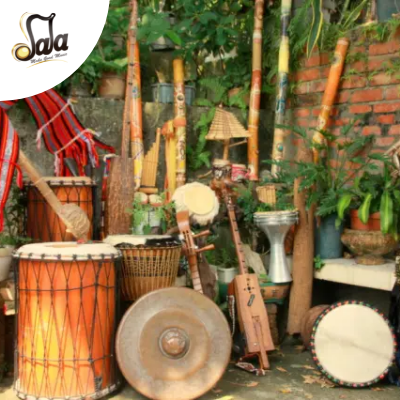
What Does “Ethnic Musical Instrument” Mean?
In everyday use, the phrase describes an instrument strongly connected with the musical life of a community or region. Scholars and musicians often prefer terms such as traditional, regional, folk or simply the instrument’s own name. That language is usually more precise and avoids treating some cultures as “ethnic” while presenting others as neutral or universal.
An instrument does not have to be ancient, handmade or used by only one group to belong to a tradition. Many have changed through trade, migration, courts, religious practice, broadcasting, conservatories and modern manufacturing. The violin, for example, entered numerous regional traditions and developed distinctive tunings, techniques and repertoires in each.
Culture is carried through practice
The cultural identity of an instrument lies not only in its shape. It is also heard in tuning systems, rhythmic cycles, ornamentation, repertoire, ensemble roles and the relationship between performer and audience. Two visually similar lutes or bowed instruments may therefore sound and function very differently.
Names and borders can overlap
Names change across languages, and one name can identify different instruments. Tanbur, for instance, belongs to a family of long-necked lutes whose construction and playing style vary by region. Likewise, kemençe may refer to the small Black Sea fiddle or to the differently shaped classical kemençe used in Ottoman/Turkish art music.
How Traditional Instruments Are Classified

A practical first step is to ask what vibrates to create the sound. Instruments can be grouped as:
- Chordophones: vibrating strings, as in the oud, bağlama, tar, setar, santur and kemençe.
- Aerophones: moving air, as in the ney, zurna and many bamboo flutes.
- Membranophones: a stretched membrane, as in the darbuka, davul and tombak.
- Idiophones: the body of the instrument itself vibrates, as in gongs, bells and many rattles.
This classification describes sound production, not cultural ownership. An ensemble often combines several groups, and local musicians may organize instruments according to different concepts.
What Traditional Instruments Have in Common

- Local knowledge: makers learn how wood, skin, metal, reed or bamboo behaves in a particular design.
- Performance context: an instrument may serve dance, storytelling, worship, court music, celebration or intimate listening.
- Distinct technique: posture, touch, plectrum, bowing, breathing and ornamentation shape the musical language.
- Change over time: synthetic heads, mechanical tuners, amplification and new construction methods can coexist with older practice.
- Shared histories: related instruments frequently cross present-day national borders.
For this reason, country labels below are useful entry points rather than claims of exclusive ownership.
Traditional Musical Instruments of Turkey
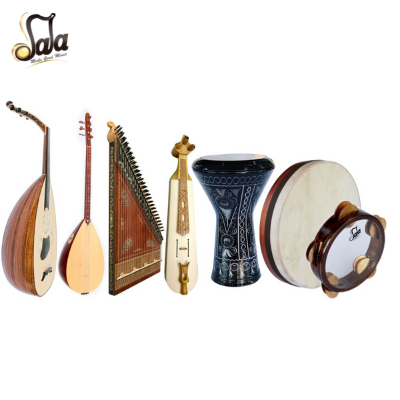
Turkey contains regional folk traditions as well as Ottoman/Turkish classical music, religious repertoires and modern popular forms. The bağlama family of long-necked lutes is central to many folk and âşık traditions. Its neck, string arrangement, tuning and playing technique vary among types and regions.
The Black Sea kemençe is a small upright bowed instrument closely associated with music and dance along the eastern Black Sea coast. The classical kemençe is a separate pear-shaped instrument used in Ottoman/Turkish classical ensembles. Wind instruments include the end-blown ney and the powerful double-reed zurna; percussion includes davul, tef, kudüm and darbuka.
What to listen for
Compare the rhythmic drive of davul and zurna in outdoor performance with the detailed ornamentation of ney, oud and classical kemençe in an indoor ensemble. The same broad geography contains very different tone ideals and social settings.
Traditional Musical Instruments of Iran

Iran’s musical life includes Persian classical music and numerous regional traditions. The tar is a long-necked, fretted lute with a double-bowl body, while the smaller setar is plucked with a fingernail. The kamancheh is a spike fiddle, and the santur is a trapezoidal hammered dulcimer whose strings are struck with light mallets.
Important percussion instruments include the goblet-shaped tombak, whose finger technique produces bass tones, rim sounds, rolls and timbral effects, and the frame drum daf. The end-blown ney appears in Persian practice as well as in neighbouring traditions, with regionally distinct construction and technique.
What to listen for
Listen to how melody is shaped through fine ornamentation and flexible timing, and how the tombak can converse with a solo instrument rather than merely mark a beat. Instrument names should remain precise: the qanun belongs broadly to West Asian and Arab/Turkish art-music traditions, but it is not a defining instrument of Persian classical music in the same way as tar, setar, kamancheh or santur.
Traditional Musical Instruments of the Philippines

The Philippines is home to many peoples, languages and musical systems, so no single list represents the whole country. In parts of Mindanao and the Sulu Archipelago, kulintang refers to an ensemble centred on a row of tuned kettle gongs, joined by larger suspended gongs and a drum. Performance depends on interlocking rhythmic patterns, variation and social interaction.
Bamboo instruments take many forms, including zithers, stamping tubes, buzzers and flutes. The nose flute known by regional names such as kalaleng or tongali appears in traditions of northern Luzon. The kubing is a bamboo jaw harp; related jaw harps carry other local names. These instruments may accompany courtship, personal expression, dance, ritual or community celebration, depending on the tradition.
What to listen for
In gong ensembles, follow how repeating parts interlock rather than searching for a single dominant melody. With bamboo instruments, notice the close relationship between material, breath or touch and the instrument’s quiet, detailed timbre.
Traditional Instruments in Arab Music

“Arab music” covers many local traditions across a wide region. A common art-music ensemble may include the fretless oud, the plucked trapezoidal qanun, the end-blown ney, violin and percussion such as riq, darbuka and frame drums. The exact instrumentation changes by period, city, genre and performer.
The oud supports nuanced melodic movement without fixed frets. Qanun players use levers or other tuning mechanisms, depending on the instrument, to negotiate pitch requirements during performance. Violinists adapt tuning, bowing and ornamentation to the maqam-based repertoire. Percussionists articulate rhythmic cycles called iqa‘at, balancing pattern, variation and cues for the ensemble.
What to listen for
Follow the movement between composed melody and improvisation, the way several musicians ornament a line differently, and how percussion defines a cycle without preventing expressive flexibility.
A Note on Syrian Musical Traditions

Syrian music belongs to the wider Levantine and Arab musical world while retaining strong local histories in cities such as Aleppo and Damascus and in rural and community traditions. Oud, qanun, ney, violin, riq and darbuka appear in urban ensembles. The zurna and double-headed drum are associated with some outdoor and celebratory settings across Syria and neighbouring regions.
It is more accurate to describe bowed instruments by their specific local names and construction than to label a generic “Syrian kemençe.” Instrument families have travelled throughout Anatolia, the Levant, Iraq, Iran and the Balkans, but related names do not make every form identical. Migration, trade and individual makers have all shaped these shared histories.
How to Explore a Tradition Respectfully
- Start with the instrument’s local name and, when possible, its original spelling.
- Listen to complete performances, not only short technique clips.
- Identify the region, genre, ensemble and social setting.
- Learn from musicians and makers rooted in the tradition.
- Avoid claiming that one modern nation exclusively “invented” a family of related instruments without strong evidence.
- Credit performers, teachers, composers and source recordings.
Choosing a Traditional Instrument
Choose according to the music you want to study and the guidance available to you. Ask about dimensions, tuning, string or membrane type, climate sensitivity, spare parts and maintenance. A highly decorated instrument is not automatically a better musical tool; reliable construction, comfortable geometry and a balanced sound matter more.
Explore Sala Muzik’s collections of ouds, Turkish musical instruments, Persian instruments and percussion instruments. For a closer look at one instrument family, read our guide to the kemençe.
Frequently Asked Questions
Is “ethnic instrument” the same as “folk instrument”?
Not exactly. “Ethnic” is a broad commercial or everyday label, while “folk” may refer to a particular community repertoire. “Traditional” or the instrument’s specific name is often clearer.
Can one instrument belong to several cultures?
Yes. Instrument families travel and change. Oud-type lutes, spike fiddles, end-blown flutes, frame drums and double-reed instruments appear across many regions, with distinct local forms and techniques.
Are handmade instruments always traditional?
No. Handmade describes production, not repertoire or cultural role. A traditional model can be factory-made, and a handmade instrument can be a new experimental design.
How can I identify an unfamiliar instrument?
Note its shape, sound-producing material, playing posture, number of strings or holes and the place where it was recorded. Then compare museum catalogues, maker descriptions and performances by knowledgeable musicians.
What should a beginner buy first?
Start with an instrument appropriate to your teacher and intended repertoire. Prioritize stable tuning, comfortable dimensions, available replacement parts and clear after-sales support.


Leave a comment